
Debt consolidation is everywhere right now.
Ads promise lower payments. Lenders highlight “simplified finances.” Financial influencers frame it as a reset button.
But here’s the real question:
Are these trends actually helping consumers or just reshuffling debt into a different shape?
Let’s look at it honestly.
Why Debt Consolidation Is Growing
Several forces are driving the surge:
- Higher credit card balances
- Rising interest rates
- Inflation pressure on household budgets
- Increased awareness of personal finance tools
When credit card APRs climb into the 20%+ range, consolidation loans offering lower rates start to look appealing.
On the surface, it makes sense. Lower rate. One payment. Cleaner structure.
But outcomes depend on behavior, not marketing.
The Real Benefit: Structure and Focus
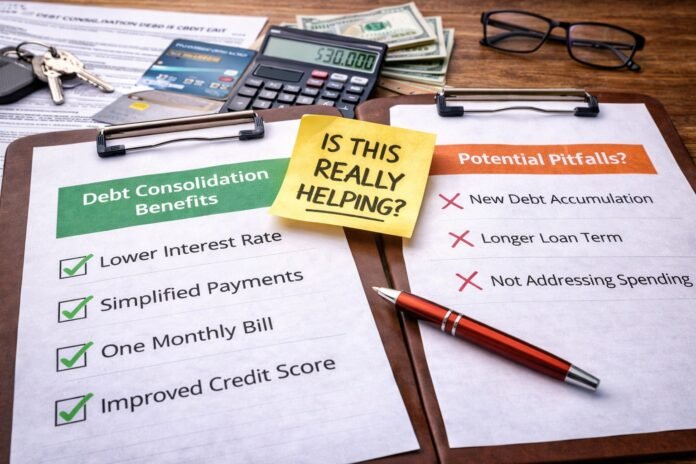
When used correctly, debt consolidation can:
- Lower overall interest costs
- Reduce monthly payments
- Simplify budgeting
- Improve credit utilization over time
For disciplined borrowers, this structure creates momentum. One clear payoff path instead of five scattered balances.
That psychological clarity matters more than people think.
Where Consumers Get It Wrong
Here’s where the trend turns risky.
1. They Consolidate Then Reaccumulate
The most common mistake is treating consolidation as relief instead of restructuring.
If you move $20,000 in credit card debt into a loan but continue using those cards, you haven’t solved the problem. You’ve doubled it.
2. They Focus Only on Monthly Payment
Lower monthly payments feel good.
But if the repayment term stretches longer, total interest paid can increase significantly.
Consolidation should reduce both stress and total cost, not just delay it.
3. They Ignore the Type of Loan
Not all consolidation is equal:
- Personal loans are unsecured
- Balance transfer cards are short term tools
- Home equity options use your property as collateral
Turning unsecured debt into secured debt increases risk. If repayment fails, the consequences are bigger.
What the Data Suggests
Recent consumer trends show that consolidation can improve repayment outcomes when:
- Interest rates are meaningfully lower
- Borrowers stop using revolving credit
- Income is stable
- The repayment plan is clear and fixed
When those conditions aren’t present, default risk increases.
In other words, the tool works but only under the right circumstances.
Are Lenders Benefiting More Than Consumers?
Let’s be realistic.
Lenders benefit from:
- Origination fees
- Extended loan terms
- Interest over time
That doesn’t make consolidation bad. It just means it isn’t charity. It’s a financial product.
Consumers benefit only if the math favors them.
Signs Consolidation Is Actually Helping
You’ll know consolidation is working if:
- Your total interest cost decreases
- Your payoff timeline shortens
- Your credit utilization improves
- You’re not adding new debt
If those boxes aren’t checked, the trend may be cosmetic rather than transformational.
The Bigger Picture
Debt consolidation isn’t a cure. It’s a financial tool.
In today’s economic environment, it’s becoming more common because credit card debt is more expensive. That shift makes consolidation more relevant but not automatically smarter.
The real advantage comes from:
- Clear strategy
- Spending discipline
- Understanding total cost
Without those, consolidation becomes a temporary patch.
Are debt consolidation trends helping consumers?
Yes – for those who use them strategically.
No – for those who see them as an escape instead of a restructuring tool.
The difference isn’t the loan. It’s the behavior behind it.
If you’re considering consolidation, run the numbers carefully. Compare total interest, repayment timeline, and your ability to avoid new debt.
The smartest financial moves aren’t trendy. They’re calculated.
In another related article, Complete Guide to Debt Relief: Options, Strategies, and Solutions