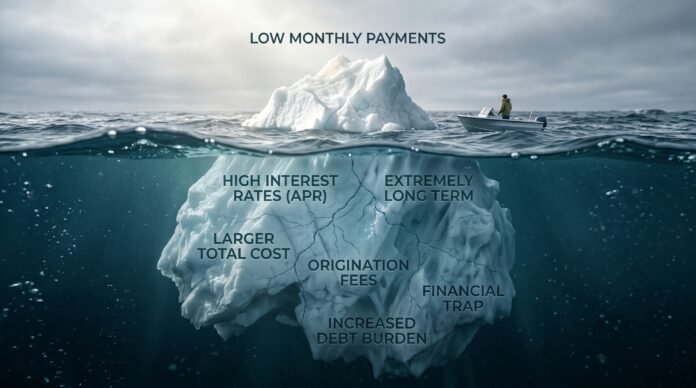
A low monthly payment feels like a win.
But in lending, low payment doesn’t always mean low cost.
In fact, it’s often the opposite.
Here’s what lenders don’t always emphasize clearly.
1. Longer Loan Terms Increase Total Interest
Lower payments often come from longer repayment periods.
Example:
- 3-year loan = higher monthly payment, lower total interest
- 7-year loan = lower monthly payment, higher total interest
You’re paying for time.
2. More Time Means More Interest Accumulation
Interest doesn’t disappear because payments are smaller.
It stretches out.
That means:
- More months of interest
- Higher total repayment
- Slower principal reduction
3. Fees Can Be Hidden in the Structure
Some “affordable” loans include:
- Origination fees
- Processing fees
- Insurance add-ons
- Penalties for early repayment
These increase the total cost quietly.
4. You Might End Up Owing Longer Than Expected
Extended payment structures can trap borrowers in long cycles of debt.
Even if payments feel manageable, the loan can:
- Stick around for years
- Limit future borrowing
- Delay financial progress
5. Low Payment Can Encourage More Debt
Psychologically, lower payments feel “safe.”
That can lead to:
- Taking on additional loans
- Overspending
- Ignoring total debt load
Comfort can create overextension.
6. The Real Metric You Should Check
Instead of focusing on monthly payment, check:
- Total repayment amount
- Interest over time
- Loan term length
- Early payoff flexibility
That tells the real story.
A low monthly payment is not always a good deal.
It’s just one part of the structure.
The smartest borrowers look beyond affordability today and focus on total cost over time.
In another related article, Why Most Homeowners Overestimate How Much They Can Borrow From Their Home