
Home Equity Lines of Credit (HELOCs) have become one of the most popular borrowing tools available to homeowners. They offer flexibility, relatively easy access to funds and often lower interest rates than credit cards or unsecured personal loans.
For many homeowners, that flexibility creates a sense of financial security.
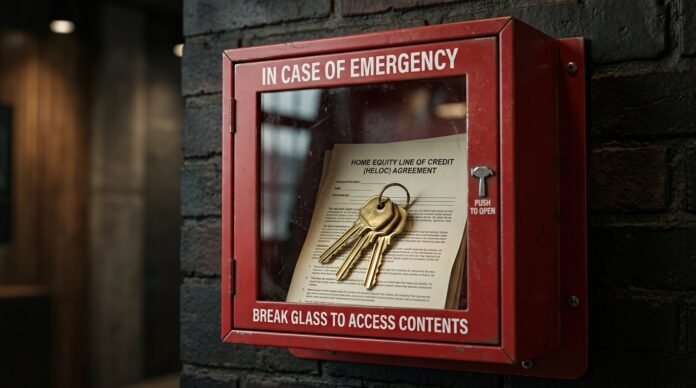
In fact, some homeowners view their HELOC as an emergency fund.
The logic seems reasonable. If an unexpected expense arises, they can simply borrow against their home’s equity rather than maintain a large cash reserve.
At first glance, this strategy may appear practical. Why keep tens of thousands of dollars sitting in a savings account when a HELOC can provide access to funds when needed?
The problem is that emergency planning and emergency borrowing are not the same thing.
While HELOCs can play a role in financial preparedness, many consumers underestimate the risks of relying on home equity as their primary emergency solution. In many cases, the greatest risk isn’t the HELOC itself. It’s the assumptions borrowers make about how available, affordable, and reliable that borrowing will be when an emergency actually occurs.
Understanding these risks can help homeowners make more informed decisions about both emergency preparedness and home equity borrowing.
Why HELOCs Feel Like a Safety Net
HELOCs offer something consumers value highly:
Access.
Once approved, homeowners often have a credit line available that can be used when necessary.
This creates a feeling of preparedness.
Many borrowers think:
- “If something happens, I have access to funds.”
- “I don’t need a large emergency fund.”
- “My home’s equity can cover unexpected costs.”
This mindset is understandable.
A HELOC may provide access to tens of thousands of dollars or more, often at borrowing costs lower than many other forms of debt.
However, access to credit and access to cash are fundamentally different forms of financial security.
The Difference Between Savings and Borrowing
An emergency fund consists of money already owned.
A HELOC consists of money that must be borrowed.
This distinction may seem obvious, but it is often overlooked during financial planning.
When using savings:
- No repayment is required.
- No interest is charged.
- Future obligations do not increase.
When using a HELOC:
- Debt is created.
- Interest begins accumulating.
- Future payments become necessary.
Both options provide liquidity, but only one creates a financial obligation that extends beyond the emergency itself.
Why Emergencies Often Arrive During Financial Stress
One of the biggest miscalculations homeowners make is assuming emergencies occur in isolation.
In reality, many emergencies happen alongside other financial challenges.
Examples include:
- Job loss
- Reduced income
- Medical issues
- Family emergencies
- Unexpected housing expenses
During these situations, a household’s financial position may already be under pressure.
Taking on new debt through a HELOC can compound that pressure rather than eliminate it.
The emergency may be solved temporarily, but the repayment obligation remains.
The False Confidence Created by Available Credit
Many homeowners feel secure simply because a HELOC exists.
The available credit limit becomes a source of reassurance.
However, financial security and borrowing capacity are not identical.
A borrower with:
- Significant savings
- Minimal debt
- Strong cash flow
may have genuine financial flexibility.
A borrower relying exclusively on available credit may be more vulnerable than they realize.
The confidence comes from access to funds.
The risk comes from the assumption that borrowing automatically solves the problem.
Why Homeowners Often Underestimate Future Payments
When emergencies occur, people naturally focus on immediate solutions.
Questions often include:
- How much will this cost?
- How quickly can I get the money?
- How do I handle the situation today?
Less attention is given to questions such as:
- What will repayment look like next year?
- How will this affect my budget long term?
- What happens if another emergency occurs?
As a result, homeowners sometimes underestimate the lasting financial impact of emergency borrowing.
The Interest Rate Variable
Most HELOCs have variable interest rates.
This means borrowing costs can change over time.
A homeowner facing an emergency may borrow based on today’s interest rate and today’s payment expectations.
However, if rates rise later:
- Monthly payments may increase.
- Interest costs may grow.
- Repayment may become more difficult.
This additional uncertainty is often overlooked during stressful situations when immediate needs take priority.
Emergency Spending Can Become Permanent Debt
One reason emergency borrowing deserves careful consideration is that emergency expenses often provide no financial return.
For example:
- Medical bills do not generate income.
- Vehicle repairs do not increase household wealth.
- Emergency travel expenses rarely create future financial benefits.
The expense solves a problem, but the debt remains afterward.
This means homeowners may be making payments long after the emergency itself has passed.
The Risk of Multiple Emergencies
Many emergency planning discussions assume a single unexpected event.
Real life is often more complicated.
Consider a scenario where a homeowner uses a HELOC for:
- A major home repair
and then later faces:
- Medical expenses
- Income disruption
- Another property-related issue
The first emergency may have already reduced available credit capacity.
The second emergency arrives before recovery is complete.
This is where reliance on borrowing instead of savings can become problematic.
Why Homeowners View Home Equity Differently
Consumers tend to think differently about home equity than other financial resources.
Because equity is tied to an owned asset, borrowing against it may feel less risky.
Many homeowners view equity as:
- Existing wealth
- Untapped value
- A financial resource they have earned
All of these perceptions contain some truth.
However, accessing that equity through a HELOC still creates debt.
The fact that the borrowing is secured by a valuable asset does not eliminate repayment risk.
The Housing Market Assumption
Another common miscalculation involves home values.
Some homeowners assume that rising property values will continue providing additional flexibility.
This belief can encourage more aggressive borrowing decisions.
However, housing markets do not always move in one direction.
Periods of slower appreciation or declining values can occur.
Homeowners who rely heavily on home equity may find their financial flexibility reduced if market conditions change.
When a HELOC Makes Sense for Emergencies
This does not mean HELOCs are inappropriate for emergency situations.
In fact, they can be valuable tools under certain circumstances.
Potential advantages include:
- Lower borrowing costs than many credit cards
- Access to substantial funds
- Flexibility in how money is used
- Faster access compared with some loan products
The key is understanding that a HELOC works best as a supplemental emergency resource rather than a complete emergency strategy.
Why Emergency Funds Still Matter
Despite the growing popularity of HELOCs, emergency savings remain important for several reasons.
Savings provide:
Immediate Liquidity
No approval process or borrowing required.
No Interest Costs
Using savings does not create new debt.
Predictability
Future payment obligations do not increase.
Greater Financial Flexibility
Cash reserves can reduce reliance on credit during uncertain periods.
Reduced Stress
Borrowing decisions often become easier when savings already exist.
The Retirement Consideration
Homeowners approaching retirement should be particularly careful when relying on HELOCs for emergencies.
During working years, future income may help absorb repayment obligations.
In retirement, income often becomes more fixed.
Unexpected borrowing costs may have a larger impact on long-term financial stability.
For retirees, preserving both liquidity and home equity can become increasingly important.
Questions Homeowners Should Ask Before Using a HELOC for Emergencies
Before drawing from a HELOC, homeowners may benefit from asking:
Is this truly an emergency?
Do I have savings available first?
How will repayment affect my future budget?
What happens if another emergency occurs?
Could rising interest rates change affordability?
Am I solving a short term problem while creating a long term one?
These questions can help clarify whether borrowing is the most appropriate solution.
Signs You May Be Overrelying on a HELOC
Certain behaviors may indicate excessive dependence on home equity borrowing.
Little or No Emergency Savings
Relying entirely on available credit.
Frequent HELOC Usage
Repeated borrowing for routine expenses.
Using Equity to Cover Income Gaps
Treating borrowed funds as household income.
Assuming Home Values Will Continue Rising
Building financial plans around appreciation expectations.
No Repayment Strategy
Borrowing without a clear plan to reduce balances.
Building a More Balanced Emergency Strategy
A stronger approach often combines multiple financial resources.
This may include:
- Emergency savings
- Appropriate insurance coverage
- Responsible debt management
- Access to credit when necessary
In this framework, a HELOC becomes one tool among many rather than the primary source of financial security.
That distinction can significantly reduce risk.
Final Thoughts
HELOCs can provide valuable flexibility during financial emergencies, and for many homeowners, they serve as an important source of liquidity. However, one of the most common mistakes consumers make is treating a HELOC as a substitute for emergency savings rather than a complement to it.
The ability to borrow against home equity can create a sense of security, but borrowing and financial preparedness are not the same thing. Emergencies often occur during periods of broader financial stress, and debt taken on during those moments can have consequences that last long after the immediate problem has been resolved.
Homeowners who understand the limitations of emergency borrowing and who balance access to credit with adequate savings and long-term planning are generally better positioned to navigate unexpected financial challenges without creating additional risks.
Ultimately, a HELOC can be an effective emergency resource. The key is recognizing that the safest emergency plan is rarely built on borrowing alone.
In another related article, HELOC Mistakes That Can Cost Homeowners Thousands