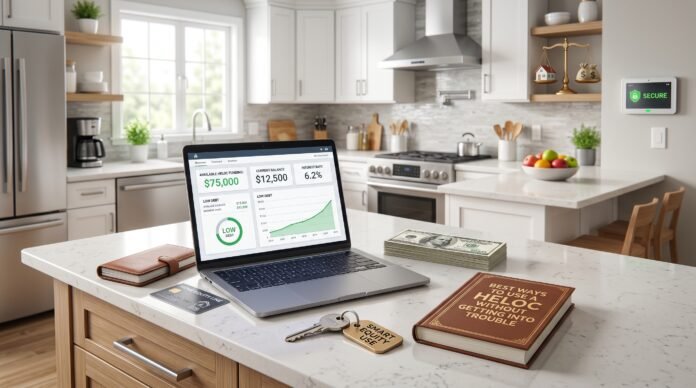
A HELOC can be one of the most useful financial tools a homeowner has.
It can also become one of the most dangerous.
The difference isn’t the product. It’s how it’s used.
Because a HELOC is flexible and often easy to access, people treat it like cheap money. That’s where problems start. Used correctly, it can strengthen your finances. Used casually, it can quietly put your home at risk.
Here’s how to use it the right way.
First: Understand What You’re Really Using
A HELOC is:
- A secured loan backed by your home
- Usually variable rate
- Designed for flexible borrowing and repayment
That flexibility is the benefit and the trap.
You’re not just borrowing money. You’re borrowing against your home’s equity.
1. Use It for Value Building Expenses
The safest use of a HELOC is when the money improves your financial position.
Good uses include:
- Home improvements that increase property value
- Necessary repairs (roof, plumbing, structural work)
- Education or skill-building that boosts income
- Strategic business investments (with clear return potential)
The idea is simple: the money should either increase your income or protect your assets.
2. Avoid Using It for Lifestyle Spending
This is where most people go wrong.
Using a HELOC for:
- Vacations
- Luxury purchases
- Everyday expenses
- Impulse spending
…turns long-term secured debt into short-term consumption.
You’re essentially financing lifestyle with your house as collateral.
That’s a risky trade.
3. Borrow Only What You Need
Just because you’re approved for a large credit line doesn’t mean you should use it.
Treat it like this:
- Access ≠ obligation
- Limit ≠ target
The smaller your balance, the lower your exposure to rising rates and repayment pressure.
4. Have a Clear Repayment Plan Before You Borrow
This is non-negotiable.
Before using a HELOC, answer:
- How will I repay this?
- Over what timeline?
- What’s my monthly repayment target?
Without a plan, balances tend to linger and interest compounds.
A HELOC should feel like a structured tool, not an open tab.
5. Be Careful With Interest Only Periods
Many HELOCs start with interest-only payments during the draw period.
That keeps payments low but:
- Your principal doesn’t decrease
- Your balance stays the same
- Future payments can jump significantly
If you only pay interest, you’re delaying the real cost.
Whenever possible, pay toward principal early.
6. Prepare for Rate Changes
Most HELOCs have variable rates.
That means:
- Payments can increase
- Total interest can rise unexpectedly
Before borrowing, stress test your situation:
- What if the rate increases by 2-3%?
- Can I still afford the payments comfortably?
If the answer is no, you’re taking on too much risk.
7. Don’t Use It as a Long Term Debt Trap
A HELOC works best as a short to medium term tool.
If balances remain high for years:
- Interest costs increase
- Risk compounds
- Financial flexibility decreases
The goal should always be to use it, manage it and reduce it, not live with it indefinitely.
8. Keep Your Primary Mortgage Strategy in Mind
If you already have a low fixed-rate mortgage, a HELOC allows you to:
- Access funds without refinancing your entire loan
- Preserve your original low rate
That’s a major advantage.
But stacking too much debt on top of your mortgage can still create pressure.
Balance matters.
9. Monitor Your Usage Regularly
Because HELOCs are revolving, it’s easy to lose track.
Check monthly:
- Current balance
- Interest rate
- Payment progress
Treat it like an active financial tool, not a set and forget account.
10. Know When to Stop Using It
If you notice:
- You’re relying on it for regular expenses
- Your balance isn’t decreasing
- Payments are becoming stressful
That’s your signal to pause and reassess.
A HELOC should support your finances not sustain them.
A HELOC is powerful because it gives you access to your home’s equity without restructuring your entire mortgage.
But that power comes with responsibility.
Used correctly, it can:
- Improve your financial position
- Provide flexibility
- Reduce reliance on high interest debt
Used carelessly, it can:
- Increase long term debt
- Expose your home to risk
- Create financial instability
The smartest approach is simple:
Borrow with purpose, repay with discipline and never forget what’s backing the loan.
In another related article, Pros and Cons of Refinancing Your Home in 2026