
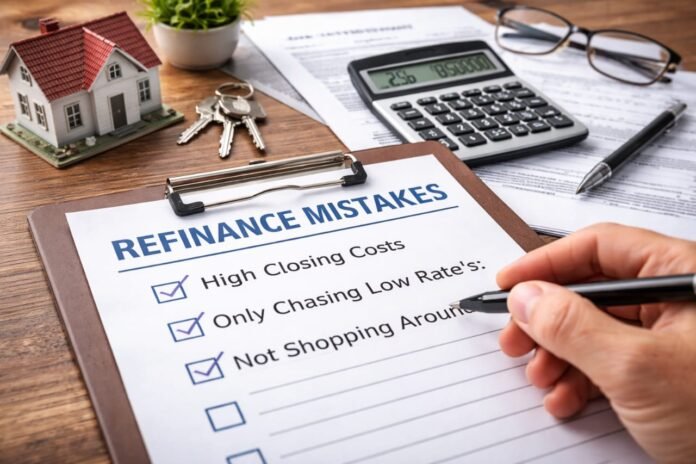
Refinancing can lower your monthly payment, reduce your interest rate, or help you tap into home equity.
But it’s not automatically a smart move.
Many homeowners rush into refinancing without running the numbers or understanding the long-term impact. The result? Higher costs, longer debt timelines, or savings that never materialize.
Here are the most common refinancing mistakes and how to avoid them.
1. Focusing Only on the Monthly Payment
Lowering your monthly payment feels like a win. But that number alone doesn’t tell the full story.
Some refinance offers stretch your loan term back to 30 years. That can reduce your payment but increase the total interest paid over time.
How to Avoid It:
- Compare total loan cost, not just monthly payment
- Review the full amortization schedule
- Calculate lifetime interest savings
A lower payment is helpful but long term savings matter more.
2. Ignoring Closing Costs
Refinancing isn’t free.
Typical refinance closing costs range from 2% to 5% of the loan amount. On a $300,000 mortgage, that could mean $6,000-$15,000 in upfront costs.
If you don’t plan to stay in the home long enough, you may never recover those costs.
How to Avoid It:
- Calculate your break-even point
(Total closing costs ÷ monthly savings = months to recover cost) - Ask lenders for a full Loan Estimate before committing
If your break even point is five years and you plan to move in three, refinancing may not make sense.
3. Not Shopping Around
Many homeowners refinance with their current lender out of convenience.
That can be expensive.
Rates and lender fees vary widely. Even a 0.25% rate difference can save or cost thousands over the life of the loan.
How to Avoid It:
- Compare at least 3-5 lenders
- Look at APR, not just interest rate
- Review origination fees and discount points
Tip: Use a trusted mortgage comparison platform to check real time refinance rates before locking anything in.
4. Extending the Loan Term Too Long
Resetting your mortgage clock can quietly delay your financial goals.
If you’ve already paid five or seven years on a 30-year loan, refinancing into another 30-year term starts the cycle over.
How to Avoid It:
- Consider a 15-year refinance if affordable
- Compare a shorter term refinance option
- Evaluate how it impacts your retirement timeline
Sometimes a slightly higher monthly payment now means massive interest savings long term.
5. Tapping Equity Without a Plan
Cash out refinancing can be useful especially for high interest debt consolidation or major home improvements.
But using home equity for lifestyle spending is risky.
You’re converting unsecured debt into secured debt backed by your home.
How to Avoid It:
- Only use cash-out funds for strategic purposes
- Compare cash-out refinance vs. HELOC options
- Avoid using equity for depreciating purchases
Your home shouldn’t become your emergency credit card.
6. Overlooking Credit Score Impact
Your credit score directly affects your refinance rate.
Even a small drop in your score can increase your offered rate.
How to Avoid It:
- Check your credit before applying
- Avoid opening new credit accounts during the process
- Correct errors on your credit report
Improving your score before applying can significantly lower your long term borrowing cost.
7. Refinancing at the Wrong Time
Market conditions matter.
If rates are only slightly lower than your current mortgage, refinancing may not justify the costs. Historically, many experts suggest refinancing makes sense when rates drop by at least 0.5%-1%, but it depends on your loan size and timeline.
Timing also depends on:
- How long you plan to stay in the home
- Your financial goals
- Current housing market conditions
How to Avoid It:
- Run detailed savings projections
- Compare today’s rates with your current rate
- Reassess your long term housing plans
Quick Refinance Checklist
Before refinancing, confirm:
- You understand total closing costs
- You’ve compared multiple lenders
- The break even point makes sense
- The new term aligns with your goals
- You’re not extending debt unnecessarily
- Your credit is in strong shape
If any of these are unclear, pause and reassess.
Refinancing can be powerful but only when done strategically.
The right refinance can lower costs, accelerate debt payoff, or free up equity for smart financial moves. The wrong one can extend your mortgage for years and increase your total interest paid.
Before signing anything, compare offers carefully.
Check current refinance rates and lender options now to see if a refinance truly works in your favor.
In another related article, Why More Homeowners Are Using HELOCs Instead of Refinancing