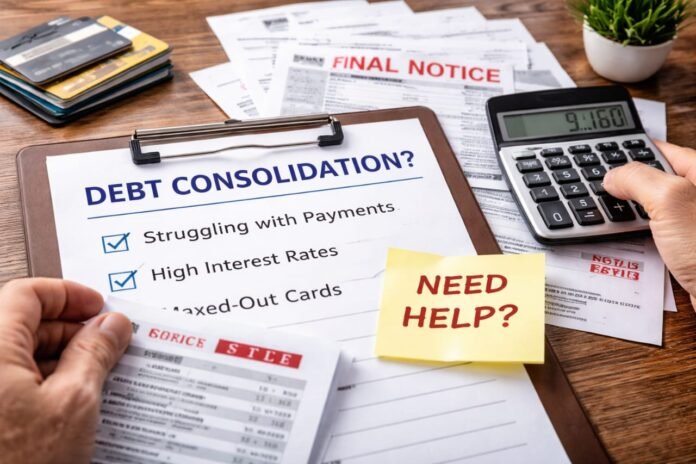
Debt usually doesn’t explode overnight.
It builds quietly. A balance transfer here. A personal loan there. Minimum payments that seem manageable until they aren’t.
The earlier you recognize the warning signs, the more options you have. Wait too long, and your choices shrink.
Here are the clearest signals that it may be time to consider a structured debt consolidation plan.
1. You’re Only Making Minimum Payments
Minimum payments are designed to keep you in debt longer.
If most of your monthly payments are barely covering interest, your principal balance may not be shrinking in any meaningful way. That means you’re working hard just to stay in place.
Warning sign: Your balances look almost the same month after month.
2. Your Interest Rates Are Crushing You
Credit cards often carry double digit interest rates. When you’re juggling multiple high-interest accounts, interest becomes your biggest expense.
If a large portion of your payment is going toward interest instead of reducing debt, consolidation could lower your overall rate and speed up payoff.
Warning sign: You feel like you’re paying a lot but getting nowhere.
3. You’re Using Credit to Pay Other Credit
This is a cycle that escalates quickly.
If you’re shifting balances from one card to another, taking cash advances to cover payments, or using one loan to manage another without a clear strategy, it’s time to pause.
That’s not a plan. That’s survival mode.
4. You’re Struggling to Keep Track of Due Dates
Multiple payment dates increase the chance of missed payments. Even one late payment can damage your credit score and trigger penalty rates.
Consolidation can simplify your finances into one structured monthly payment.
Warning sign: You’ve missed or nearly missed payments in the last 3-6 months.
5. Your Debt-to-Income Ratio Is Rising
Lenders pay close attention to your debt-to-income ratio (DTI). If a large portion of your monthly income is going toward debt, it affects your ability to qualify for better financial products.
If your DTI is creeping upward, consolidation may help restructure payments into something more manageable.
6. You Feel Financially Stressed Every Month
This one is less technical but just as real.
If money anxiety hits every time bills are due, that’s a signal. Debt should be structured and controlled, not chaotic.
Financial stress tends to worsen over time if nothing changes.
7. You’ve Stopped Saving Completely
If you can’t contribute to savings because every extra dollar goes toward debt payments, you’re vulnerable.
An emergency expense could push you deeper into borrowing.
A well-structured consolidation plan can free up breathing room but only if it actually lowers your overall cost.
When Debt Consolidation Makes Sense
Debt consolidation can be effective if:
- You qualify for a lower interest rate
- You commit to not accumulating new debt
- You have stable income
- The plan shortens your payoff timeline
It doesn’t solve spending habits. It restructures debt. The discipline still has to come from you.
Options to Consider
Depending on your situation, consolidation might involve:
- A personal loan with a fixed rate
- A balance transfer card (short term strategy)
- A home equity option like a HELOC (if you’re a homeowner)
Each option carries different risks and benefits. For homeowners especially, using home equity means your property becomes part of the equation. That requires careful consideration.
What to Do Next
If several of these signs apply to you, don’t ignore them.
Start by:
- Listing all balances and interest rates
- Calculating your total monthly debt payments
- Comparing consolidation loan rates available to you
- Reviewing how long payoff would take under each option
The goal isn’t just to lower your payment. It’s to reduce total interest and regain control.
Debt rarely fixes itself. It either improves because you take action or it compounds quietly.
If you’re seeing early warning signs, exploring a consolidation plan now could prevent long term financial strain.
Compare current debt consolidation options and see whether restructuring your payments could help you regain momentum.
In another related article, Complete Guide to Debt Relief: Options, Strategies, and Solutions