
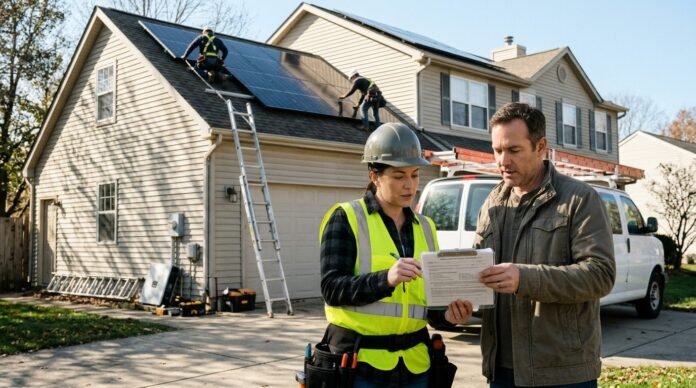
Installing solar panels can help homeowners reduce their dependence on traditional electricity sources and manage long term energy costs. However, adding a solar energy system to a property also introduces new insurance considerations that should not be overlooked.
Solar panels are a substantial investment. Depending on the system’s size, equipment quality, installation complexity and whether battery storage is included, the total project cost can reach tens of thousands of dollars. Once installed, the equipment becomes part of the property’s overall risk profile.
A homeowners insurance policy may already provide protection for certain solar panel installations, but that does not mean every system is automatically covered under every policy. Coverage can depend on whether the panels are attached to the roof, installed elsewhere on the property, leased, financed or owned by a third party. The policy may also contain limits, exclusions or conditions that affect how a claim is handled.
Before signing an installation contract, homeowners should contact their insurance company and review five important details.
1. Whether Solar Panels Are Covered Under Dwelling or Other Structures Protection
The first question is how the insurer classifies the solar panels under the existing homeowners policy.
Solar panels permanently attached to a home’s roof may be treated as part of the dwelling. However, ground mounted systems, detached solar structures and equipment installed on separate buildings may fall under other structures coverage or be subject to different policy provisions.
This distinction matters because dwelling coverage and other structures coverage may have different insurance limits.
For example, a homeowner may have $400,000 in dwelling coverage and a separate other structures limit equal to 10% of that amount. If a ground-mounted solar installation is classified as another structure, the available protection may be different from what the homeowner expects.
The same issue can arise with solar panels installed on a detached garage, workshop, or other building.
What homeowners should ask their insurer
- Are roof-mounted solar panels covered under the dwelling section?
- Are ground-mounted solar panels covered under other structures?
- Does the policy cover panels installed on detached buildings?
- Are inverters, mounting equipment, wiring and monitoring systems included?
- Are there separate limits for solar equipment?
- Does the policy require the installation to be reported before coverage applies?
Homeowners should also ask whether the insurance company requires photographs, installation documentation, or an updated property valuation.
It is important to establish how the system will be classified before installation. A homeowner who assumes that all solar equipment automatically receives full dwelling coverage may discover that the actual policy treats part of the installation differently.
The insurer should provide a clear explanation of the applicable coverage and any limits or conditions.
2. Whether the Homeowners Policy Covers Storm, Fire, Theft and Other Solar Panel Damage
Solar panels are exposed to outdoor conditions throughout the year. Although they are designed to withstand certain environmental stresses, they can still be damaged by severe weather, falling objects, fire, vandalism or other unexpected events.
The second insurance detail homeowners should examine is whether their policy covers the specific types of damage that could affect the system.
Storm and hail damage
Hail can crack solar panel glass, damage electrical components, or reduce system performance. Strong winds may also damage mounting equipment or affect the roof structure supporting the installation.
Homeowners should determine whether wind and hail are covered and whether separate deductibles apply.
Fire and electrical damage
A fire involving the home could damage the panels, inverter, wiring, or battery storage equipment. However, coverage for fire-related losses should be distinguished from protection against equipment breakdown or electrical malfunction.
A standard homeowners policy may cover resulting physical damage from a covered fire without necessarily paying for mechanical or electrical failure that occurs independently.
Theft and vandalism
Solar equipment can represent a valuable target, particularly when panels, batteries, or inverters are installed in accessible locations.
Homeowners should confirm whether theft and vandalism are covered and whether the policy imposes any special requirements for permanently installed or detached equipment.
What homeowners should ask their insurer
- Does the policy cover hail and wind damage to solar panels?
- Are fire related losses involving solar equipment covered?
- Does theft protection apply to panels, inverters, and batteries?
- Are vandalism and falling object damage included?
- Are there separate wind, hail, or hurricane deductibles?
- Are equipment breakdown and electrical failure covered separately?
Another important consideration is the distinction between physical damage and lost electricity production.
If a storm damages the panels and prevents the household from generating electricity, the insurer may cover eligible physical repairs without compensating the homeowner for all lost energy savings or reduced electricity production.
Homeowners should not assume that a policy covering solar equipment automatically provides business interruption style protection for lost energy generation.
3. Whether the Existing Dwelling Coverage Limit Is Still Sufficient
Adding solar panels can change the replacement cost of a property.
A homeowner who installs a substantial solar energy system may increase the amount of money needed to reconstruct or restore the property after a major covered loss. If the existing dwelling limit does not adequately reflect the updated replacement cost, the homeowner could face a coverage shortfall.
This is especially important when the installation includes more than the panels themselves.
A complete system may include:
- Solar panels and mounting structures.
- Inverters and electrical equipment.
- Wiring and connections.
- Battery storage units.
- Specialized roof modifications.
- Electrical panel upgrades.
- Monitoring and control equipment.
The total replacement cost may be considerably higher than the price of the panels alone.
Why this matters
Imagine a homeowner whose property has a dwelling coverage limit of $350,000. The homeowner then installs a solar system costing $25,000, including panels, installation and associated electrical work.
If the insurer determines that the system increases the property’s insured replacement value, the homeowner may need to review the dwelling limit to ensure the policy remains adequate.
The exact treatment depends on the policy and how the equipment is classified. Some insurers may include permanently attached equipment within existing dwelling coverage, while others may require an adjustment or additional coverage.
Homeowners should also remember that dwelling insurance is generally based on the estimated cost of rebuilding rather than the property’s market value.
What homeowners should ask their insurer
- Does installing solar panels change the home’s estimated replacement cost?
- Should the dwelling coverage limit be increased?
- Are battery systems included in the insured property value?
- Does the policy cover the full replacement cost of the installed equipment?
- Could a major loss result in the homeowner paying part of the rebuilding cost?
- Will the insurer reassess the property after installation?
It is also worth reviewing any replacement-cost provisions and inflation-related adjustments in the policy.
A solar installation should not automatically be treated as a reason to increase dwelling coverage by its entire purchase price. Instead, homeowners should ask the insurer to determine how the installation affects the property’s insured rebuilding value and whether the equipment has a separate coverage limit.
4. Whether the Solar Installer Has Adequate Insurance and Liability Protection
Homeowners often focus on the insurance coverage they will receive after installation but overlook the contractor’s insurance arrangements.
Solar installation involves electrical work, roof penetrations, mounting equipment, wiring and sometimes structural modifications. Poor workmanship can create problems that may not become visible until months or years later.
For example, improperly sealed roof penetrations could allow water to enter the property. Incorrect electrical connections may create fire hazards, while poorly secured mounting equipment could increase the risk of damage during severe weather.
The homeowner may face expensive repairs and disputes if the contractor does not have appropriate insurance or cannot take responsibility for its work.
Insurance documents to request
Before hiring a solar installer, homeowners should ask for evidence of:
- General liability insurance.
- Workers’ compensation coverage, where required.
- Commercial auto insurance for business vehicles.
- Any relevant professional or contractor liability protection.
- Appropriate licenses and certifications for the work being performed.
General liability insurance may help address certain third party property damage or bodily injury claims arising from the contractor’s operations, subject to policy terms and exclusions.
Workers’ compensation is particularly important when employees are working on roofs or handling electrical equipment. Homeowners should not assume that their own homeowners policy will automatically protect them against every injury involving a contractor or subcontractor.
It is also important to understand that general liability insurance does not necessarily guarantee payment for every defect in the contractor’s work. Faulty workmanship, the cost of correcting defective work and resulting damage may be treated differently under the relevant policies.
What homeowners should ask
- Is the installer properly licensed in the state?
- Does the contractor have current general liability insurance?
- Are subcontractors covered under appropriate insurance arrangements?
- Who is responsible if installation damages the roof?
- Does the contractor provide a workmanship warranty?
- Will the installer provide a certificate of insurance?
- Does the installation contract explain responsibility for property damage?
Homeowners should verify insurance documentation rather than relying solely on verbal assurances. They should also ask whether the installer will coordinate with the utility company, obtain required permits, and arrange inspections.
A properly insured contractor does not eliminate every installation risk, but it can reduce the homeowner’s exposure to disputes and certain unexpected financial liabilities.
5. How Ownership, Financing, Leases and Battery Storage Affect Coverage
The final detail is who legally owns the solar equipment and how the system is financed.
Not every homeowner who has solar panels installed actually owns the equipment. Some systems are purchased outright, while others are financed through loans, leases, or power purchase agreements.
These arrangements can affect who is responsible for insuring the equipment and what happens when it is damaged.
Owned solar systems
When homeowners purchase a system outright, they generally have a direct financial interest in the panels and associated equipment.
They should confirm whether their homeowners policy covers the system as part of the dwelling or other insured property and whether any additional limits or endorsements are necessary.
Financed solar systems
A homeowner who finances the installation may own the equipment while making payments to a lender.
The homeowner should review the financing agreement to determine whether it contains insurance requirements and whether the lender has any financial interest that must be recognized.
They should also confirm that the homeowners policy provides adequate protection for the equipment.
Leased solar systems
With a lease, the solar company generally owns the equipment and allows the homeowner to use it in exchange for periodic payments.
The lease agreement should explain who is responsible for insuring the panels, inverters, and other equipment. The homeowner should not assume that the solar company’s insurance automatically covers every type of loss or all damage to the surrounding property.
Power purchase agreements
Under a power purchase agreement, the homeowner typically purchases electricity generated by a system owned and maintained by a third party provider.
The contract should explain responsibility for equipment damage, maintenance, removal, and replacement.
Battery storage systems
Battery storage introduces another important coverage consideration.
Home battery systems can involve expensive equipment, electrical connections and specific installation requirements. Homeowners should ask whether batteries are covered under the same provisions as solar panels or whether additional coverage is necessary.
They should also ask whether the insurer has requirements concerning installation location, electrical safety, ventilation and approved equipment.
Questions to ask before signing
- Who legally owns the solar panels and batteries?
- Who is responsible for insuring leased equipment?
- Does the financing agreement impose insurance requirements?
- Are batteries covered under the existing homeowners policy?
- Does the insurer require specific installation standards?
- Who pays for equipment removal or replacement after a covered loss?
- What happens to coverage if the system is transferred to a new homeowner?
These questions are particularly important because ownership and maintenance responsibilities can become complicated when a home is sold or when a solar company goes out of business.
Homeowners should review the solar contract and insurance policy together to identify responsibilities that may otherwise be overlooked.
A Pre Installation Insurance Checklist for Homeowners
Before allowing a contractor to begin work, homeowners should complete a basic insurance review.
- Notify the homeowners insurance company about the planned installation.
- Confirm whether roof-mounted and ground-mounted panels receive different coverage.
- Check protection against fire, wind, hail, theft, and vandalism.
- Review the dwelling and other structures’ coverage limits.
- Confirm whether batteries, inverters, wiring, and mounting equipment are covered.
- Ask about separate deductibles and equipment breakdown exclusions.
- Verify the solar contractor’s insurance and licensing.
- Review ownership, financing, lease and maintenance responsibilities.
- Obtain written confirmation of any coverage changes or additional requirements.
Homeowners should keep the installation contract, equipment specifications, invoices, permits, inspection reports, and photographs in a safe place. These documents may become useful when updating the policy or submitting a future claim.
Solar panels can add value and energy flexibility to a home, but the installation also creates insurance questions that deserve attention before work begins. Homeowners should understand how the equipment is classified under their policy, whether common sources of damage are covered, whether dwelling limits remain adequate and who is responsible for contractor related risks.
Ownership arrangements and battery storage can introduce additional complications, particularly when a third party owns or maintains the equipment.
The most practical approach is to contact the insurer before signing the installation contract, request clear explanations of applicable coverage, and obtain written confirmation of any necessary policy changes. Reviewing these details early can help homeowners avoid discovering important coverage gaps only after a storm, fire, electrical problem or other costly loss.