Homeownership has traditionally been viewed as a path toward financial stability.
A homeowner makes mortgage payments, builds equity, and gradually gains ownership of an asset that may appreciate over time. For many households, that long term wealth building potential remains one of the biggest advantages of owning a home.
But the financial reality of owning a home is changing.
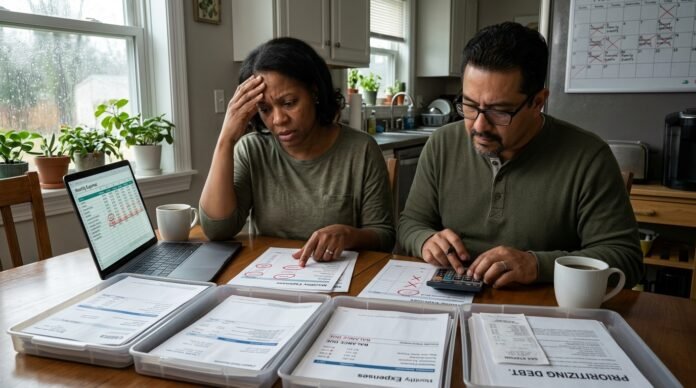
The mortgage is no longer the only expense demanding attention. Homeowners are increasingly having to balance housing costs with higher insurance premiums, property taxes, utilities, maintenance, food, transportation and other household expenses.
When several of these costs rise at the same time, the financial strategy that worked a few years ago may no longer work today.
A homeowner who once had enough disposable income to make extra mortgage payments may now need to prioritize cash savings. Someone who planned to renovate may decide to postpone the project. Another homeowner may consider using a HELOC to manage a large expense.
These aren’t simply budgeting decisions.
They can affect debt levels, home equity, retirement preparation and long term financial flexibility.
The central question for homeowners is increasingly becoming:
How should limited household income be allocated when almost every major expense seems to be competing for it?
The Homeownership Equation Has Become More Complicated
The cost of owning a home is often reduced to one number: the mortgage payment.
That number can be misleading.
A homeowner’s real housing expense may include:
- Mortgage principal and interest.
- Property taxes.
- Homeowners insurance.
- HOA fees.
- Utilities.
- Maintenance.
- Repairs.
- Landscaping.
- Pest control.
- Appliance replacement.
Some of these expenses are predictable.
Others arrive unexpectedly.
This makes homeownership fundamentally different from a simple fixed monthly subscription.
A household has to prepare for expenses that may not appear every month but can still be financially significant.
Rising Costs Can Change What “Affordable” Means
A home may have been affordable when the homeowner purchased it.
That doesn’t necessarily mean the same budget remains comfortable years later.
Income may rise, but so can:
- Insurance.
- Property taxes.
- Utilities.
- Transportation.
- Food.
- Childcare.
- Healthcare.
- Home maintenance.
If expenses rise faster than income, the homeowner may become financially stretched even without taking on new debt.
This is why homeowners need to periodically reassess affordability rather than assuming that the original purchase decision remains financially comfortable forever.
Mortgage Payments May Be Stable While Everything Else Changes
A fixed rate mortgage provides an important degree of predictability.
The principal and interest payment generally remains stable over the life of the loan.
But the homeowner’s overall cost of living doesn’t remain fixed.
Property taxes can change.
Insurance premiums can increase.
Utility bills can rise.
Repairs become more expensive.
This creates an interesting financial situation.
The mortgage may feel stable while the total cost of maintaining the household continues to increase.
As a result, homeowners may have less disposable income even though their mortgage payment hasn’t changed.
Insurance Costs Can Become a Bigger Priority
Homeowners insurance is one of the expenses that can receive less attention when budgets are comfortable.
But when premiums rise, the impact can become substantial.
Higher insurance costs can force homeowners to reconsider other financial priorities.
They may need to decide whether to:
- Reduce discretionary spending.
- Delay renovations.
- Increase savings.
- Rework debt payments.
- Review coverage and deductibles.
- Shop for alternative policies where appropriate.
The important point is that insurance shouldn’t simply be canceled or drastically reduced to create short term cash flow.
The home is a major asset and inadequate protection can create a much larger financial problem after a serious loss.
Property Taxes Can Change the Monthly Budget
Property taxes are another expense that can affect affordability even when the mortgage itself remains unchanged.
An increase in property taxes can effectively raise the homeowner’s housing costs.
For homeowners who already operate with a narrow monthly margin, even a relatively modest increase can affect:
- Savings.
- Debt repayment.
- Retirement contributions.
- Discretionary spending.
This is why homeowners should include potential changes in property-related costs when building longer-term financial plans.
Maintenance Becomes More Important When Money Gets Tight
Maintenance can be one of the first expenses homeowners are tempted to postpone.
That can be a mistake.
Some maintenance is discretionary.
Other maintenance protects the property.
Ignoring a small plumbing problem, roof issue, electrical concern or HVAC problem can potentially allow the problem to become more expensive.
The challenge is distinguishing between:
“This can wait.”
and
“This will become much more expensive if I wait.”
A good homeowner budget should prioritize preventive maintenance even when other household costs are rising.
Homeowners Are Having to Prioritize Liquidity
One of the biggest changes rising costs can create is a greater emphasis on cash reserves.
When expenses are predictable and manageable, a homeowner may feel comfortable putting extra money toward the mortgage.
When costs are rising and uncertain, liquidity becomes more valuable.
Cash can help cover:
- Repairs.
- Insurance deductibles.
- Tax increases.
- Temporary income loss.
- Emergency travel.
- Medical or family expenses.
This doesn’t mean homeowners should stop paying down debt.
It means they may need to balance debt reduction with accessible savings.
Why Being Mortgage Free Isn’t the Only Financial Goal
Paying off the mortgage is a worthwhile objective for many households.
But aggressively paying down the mortgage while maintaining little cash can create another form of vulnerability.
Imagine a homeowner has:
- A relatively manageable mortgage.
- Significant home equity.
- Almost no cash savings.
If a major repair occurs, the homeowner may have to borrow against the home or use a credit card.
That can be less desirable than maintaining a reasonable cash reserve.
Financial security isn’t simply about how little debt you have.
It’s also about how much flexibility you have when something goes wrong.
Rising Costs Can Change the Role of Debt
Debt becomes more consequential when monthly expenses increase.
A household that previously had $1,000 of discretionary income each month may suddenly have only $400 after insurance, utilities, taxes and other costs rise.
That makes every debt payment more important.
High interest balances can become particularly difficult because interest consumes money that could otherwise be used for essential expenses or savings.
Homeowners may therefore need to prioritize expensive consumer debt before aggressively paying down lower cost debt.
Credit Card Debt Can Become a Pressure Valve
When household costs rise faster than income, credit cards can become an easy way to fill the gap.
At first, the additional spending may seem manageable.
But if the balance isn’t paid in full, interest can compound the problem.
A homeowner may end up using credit cards for:
- Groceries.
- Utility bills.
- Repairs.
- Insurance.
- Household purchases.
The original cost of living increase has now become a debt problem.
That is a warning sign that the household’s budget needs to be reassessed.
The Danger of Using Home Equity to Cover Everyday Costs
Homeowners may have an alternative source of borrowing that renters generally don’t: home equity.
A HELOC or home equity loan can provide access to cash.
This can be useful for certain major expenses.
But using home equity to cover recurring household costs is different.
If a homeowner repeatedly borrows against the property to pay ordinary bills, the issue may not be a temporary liquidity problem.
It may indicate that expenses have become structurally higher than income.
Borrowing can temporarily close that gap.
It doesn’t eliminate the gap.
HELOCs Can Be Useful but They Require Discipline
A HELOC can provide flexibility because homeowners don’t necessarily have to borrow the entire approved amount.
But that flexibility can create temptation.
A homeowner might initially use $5,000 for a necessary repair.
Later, another $3,000 gets used for household expenses.
Then another withdrawal is made.
Eventually, the homeowner may have a significant balance without a clear repayment strategy.
The important question isn’t:
“How much equity can I access?”
It is:
“How much debt can my household realistically repay while still meeting rising living costs?”
Variable Rates Make Cash Flow Planning More Important
Many HELOCs have variable interest rates.
This means the cost of carrying the balance can change.
For homeowners already dealing with rising household costs, that introduces another variable into the monthly budget.
A HELOC that appears manageable today could become more expensive if interest rates increase.
Anyone considering home equity borrowing should therefore test the repayment plan against less favorable conditions.
Homeowners May Need to Delay Renovations
When household costs rise, renovations often become a lower priority.
That isn’t necessarily a bad thing.
A kitchen upgrade, finished basement, new flooring or cosmetic improvement may be desirable but it doesn’t always need to happen immediately.
Delaying discretionary projects can help homeowners:
- Preserve cash.
- Avoid new debt.
- Increase emergency savings.
- Pay down existing balances.
Necessary repairs are different.
Protecting the property should generally remain a priority even when cosmetic improvements are postponed.
Rising Costs Can Affect Home Improvement Financing Decisions
When homeowners do decide to renovate, financing deserves careful consideration.
Possible sources may include:
- Cash savings.
- Home equity loans.
- HELOCs.
- Cash out refinancing.
- Personal loans.
The cheapest option isn’t necessarily the one with the lowest monthly payment.
Homeowners should compare:
- Interest rates.
- Fees.
- Repayment terms.
- Total interest.
- Effect on home equity.
- Variable rate exposure.
The goal should be to improve the property without creating a debt burden that becomes difficult to manage.
Financial Priorities May Need to Change With Age
A homeowner’s financial priorities shouldn’t remain identical for decades.
A younger homeowner may prioritize:
- Building an emergency fund.
- Paying down expensive debt.
- Investing.
- Growing home equity.
A homeowner approaching retirement may place greater emphasis on:
- Reducing fixed expenses.
- Preserving cash.
- Managing mortgage debt.
- Planning for property taxes and insurance.
- Protecting retirement savings.
Rising household costs make these transitions even more important.
Retirement Savings Can Be Squeezed
When expenses rise, retirement contributions are often one of the easiest areas to reduce.
That can provide immediate relief.
But repeatedly cutting retirement savings to maintain current spending can create a long term problem.
Homeowners need to balance today’s financial pressure with future needs.
A home can be a valuable asset, but it shouldn’t automatically be treated as a substitute for retirement savings.
Home equity may not produce income unless the homeowner sells, downsizes, rents the property or borrows against it.
The “House Rich, Cash Poor” Problem
Rising household costs can make this situation more common.
A homeowner may have:
- Significant property value.
- Large accumulated equity.
- A relatively low mortgage balance.
Yet they may have very little cash available each month.
This is sometimes described as being house rich but cash poor.
It highlights an important distinction between net worth and liquidity.
A household can have a strong balance sheet and still experience financial stress.
Homeowners May Need to Reconsider Their Debt Priorities
A rising-cost environment can change which debts deserve attention.
For example, a homeowner may have:
- A low rate fixed mortgage.
- A high rate credit card.
- A variable rate HELOC.
- An auto loan.
The smartest repayment order may not be obvious.
Homeowners should compare:
- Interest rates.
- Balance sizes.
- Payment requirements.
- Tax considerations where applicable.
- Risk.
- Cash flow impact.
A financial strategy should be based on the entire debt structure rather than simply paying the largest balance first.
Don’t Let Short Term Pressure Create Long Term Debt
One of the most important principles for homeowners is to distinguish between temporary financial pressure and structural financial problems.
If an insurance bill increases once, using savings may be reasonable.
If household expenses consistently exceed income, borrowing may only postpone the problem.
Repeated borrowing can create a cycle:
Higher expenses → less cash flow → borrowing → larger monthly payments → even less cash flow.
Breaking that cycle requires addressing the underlying spending and income equation.
Build a Household Cost Buffer
Homeowners can make rising costs easier to manage by creating a buffer.
That might involve maintaining additional savings for:
- Insurance increases.
- Property taxes.
- Maintenance.
- Utilities.
- Major repairs.
Even if the money isn’t needed immediately, it provides flexibility when costs change.
Review Recurring Expenses Regularly
Rising costs make it worth reviewing the household budget periodically.
Look at:
Housing
Mortgage, taxes, insurance, HOA.
Utilities
Electricity, water, gas, internet.
Transportation
Car payments, fuel, insurance, maintenance.
Debt
Credit cards, personal loans, HELOCs.
Subscriptions
Streaming services, memberships, software.
Discretionary Spending
Dining, shopping, entertainment, travel.
The goal isn’t to cut everything.
It’s to determine whether the current allocation still reflects your priorities.
Don’t Confuse Cost Cutting With Financial Planning
Cutting expenses can help.
But financial planning goes further.
It asks:
- What are my biggest financial risks?
- How much cash should I maintain?
- Which debts cost me the most?
- What happens if income falls?
- How much equity should remain untouched?
- Am I still on track for retirement?
- Can I afford the home long term?
These questions help transform budgeting into a broader strategy.
Consider Income as Part of the Solution
Homeowners often focus exclusively on reducing expenses.
But rising household costs can also make additional income valuable.
Depending on circumstances, this could involve:
- Negotiating compensation.
- Taking on additional work.
- Developing a side income.
- Monetizing skills.
- Increasing business revenue.
The goal isn’t to work indefinitely just to maintain a home.
It’s to recognize that financial resilience can come from both sides of the household balance sheet:
lower expenses and stronger income.
Be Careful When Considering a Bigger Home
Rising household costs should also influence future housing decisions.
A larger home generally means more than a larger mortgage.
It can also mean:
- Higher property taxes.
- Higher insurance.
- More utilities.
- More maintenance.
- More expensive repairs.
Before upgrading, homeowners should calculate the full increase in housing costs.
A bigger house isn’t necessarily a better financial decision if it significantly reduces monthly flexibility.
Downsizing Can Become More Attractive
For some homeowners, rising costs may eventually change the financial value of their current property.
A homeowner with substantial equity but high ongoing expenses may consider downsizing.
Selling a larger home and moving into a less expensive property could potentially reduce:
- Mortgage debt.
- Property taxes.
- Insurance.
- Maintenance.
- Utilities.
This isn’t the right choice for everyone.
But it demonstrates why homeowners should periodically reassess whether the current property still fits their financial life.
Home Equity Should Support the Financial Plan Not Replace It
Home equity can be one of the strongest components of a household’s net worth.
But homeowners should avoid relying on it as a permanent solution to cash flow problems.
Using equity strategically can make sense.
Using it repeatedly to compensate for rising everyday expenses can gradually weaken the household’s financial position.
The goal should be to preserve the equity building benefits of homeownership while maintaining enough liquidity to handle real life.
A Better Priority Order for Rising Cost Environments
Every household is different, but a practical framework might look like this:
1. Protect Essential Expenses
Keep housing, utilities, insurance, food and other necessities covered.
2. Maintain Emergency Savings
Avoid leaving the household completely dependent on credit.
3. Address High Interest Debt
Expensive revolving debt can quickly consume cash flow.
4. Maintain the Property
Prioritize repairs that protect the home.
5. Continue Long Term Savings
Don’t abandon retirement planning entirely.
6. Evaluate Mortgage Paydown
Consider extra payments once the broader financial foundation is stable.
7. Use Home Equity Carefully
Treat equity as a valuable asset rather than an automatic source of spending money.
Questions Homeowners Should Ask Right Now
If household costs have increased, ask:
Has my monthly cash flow changed?
Which expenses have increased the most?
Am I relying more heavily on credit cards?
Am I using savings faster than expected?
Have I started borrowing against home equity for ordinary expenses?
Is my emergency fund still adequate?
Am I delaying necessary home maintenance?
Have I reduced retirement contributions significantly?
Does my current home still fit my long term financial goals?
These questions can reveal whether rising costs are simply an inconvenience or a sign that the household needs a broader financial reset.
Rising household costs are changing how many homeowners need to think about financial priorities.
The old strategy of simply making the mortgage payment and putting every extra dollar toward the home may not work equally well when insurance, property taxes, utilities, maintenance and other living expenses are consuming more income.
Financial flexibility becomes more valuable.
That may mean keeping more cash available, reducing expensive debt, delaying discretionary renovations, reviewing insurance and recurring expenses or reconsidering how aggressively to pay down the mortgage.
For some homeowners, accessing home equity may be appropriate for a carefully defined need.
But using a HELOC or home equity loan to repeatedly cover ordinary household expenses can be a warning sign that the underlying budget needs attention.
The most important principle is simple:
A financially successful homeowner isn’t just someone who owns a valuable property. It’s someone who can afford to keep owning it without constantly relying on new debt.
As household costs continue to change, homeowners may need to think less about maximizing one financial metric and more about creating a balanced position one that protects the home, preserves liquidity, reduces expensive debt and keeps long term financial goals intact.
Homeownership can still be a powerful wealth building tool.
But the strongest results usually come from treating the home as one part of a broader financial plan, not the solution to every financial problem.