Interest is quiet.
It doesn’t show up as a big one time expense. It builds slowly in the background until you realize you’ve paid far more than you borrowed.
If your balances aren’t dropping the way they should, interest is usually the reason.
The good news is you can reduce it faster than most people think if you act strategically.
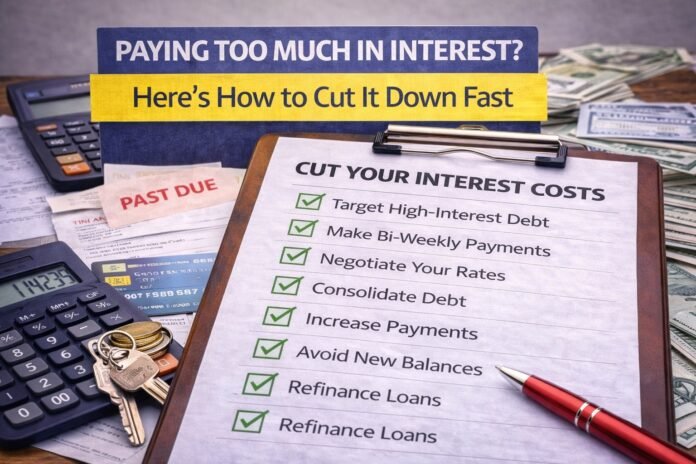
1. Target High Interest Debt First
Not all debt is equal.
Credit cards often carry the highest rates, sometimes 20% or more. That’s where most of your money is leaking.
Start by:
- Listing all debts by interest rate
- Focusing extra payments on the highest rate
- Paying minimums on the rest
This is the fastest way to reduce total interest paid.
2. Make Bi-Weekly Payments Instead of Monthly
Small shift, big impact.
Instead of paying once a month, split your payment in half and pay every two weeks.
Why it works:
- You reduce the average daily balance
- You make an extra full payment each year
Less balance = less interest charged.
3. Negotiate Your Rates
Most people never ask.
But lenders often reduce rates for customers who:
- Pay on time
- Have improved credit
- Are considering switching providers
A quick call can lead to:
- Lower APR
- Temporary promotional rates
- Hardship reductions
Even a small rate drop compounds into real savings.
4. Consolidate High Interest Balances
If you’re juggling multiple high interest accounts, consolidation can reduce costs.
Options include:
- Lower-rate personal loans
- Balance transfer credit cards
- Structured repayment programs
The goal is simple:
Replace high-interest debt with lower interest debt.
Just make sure you’re not extending the repayment timeline too far.
5. Increase Your Payment Slightly
You don’t need to double your payments to see results.
Even adding:
- $50
- $100
- or any consistent extra amount
…can significantly cut interest over time.
Why? Because more of your payment goes toward principal instead of interest.
6. Avoid Carrying New Balances
This is where many people undo their progress.
If you:
- Pay down debt
- Then reuse credit immediately
…interest keeps stacking.
Reducing interest isn’t just about paying. It’s about not adding new high cost debt at the same time.
7. Refinance Larger Debts (When It Makes Sense)
If you’re paying high interest on larger loans like:
- Mortgages
- Auto loans
- Student loans
Refinancing may lower your rate and reduce long term cost.
But run the numbers:
- Check closing costs
- Compare total interest over time
- Avoid extending the loan unnecessarily
Lower payments don’t always mean lower total cost.
8. Pay Attention to Timing
Interest is often calculated daily.
That means:
- Paying earlier in the billing cycle reduces charges
- Waiting until the due date maximizes interest accumulation
If possible, pay before the statement closes, not just before the due date.
Quick Example
Let’s say:
- Balance: $10,000
- Interest rate: 22%
- Minimum payment: $250
If you only pay the minimum, you could spend years paying mostly interest.
Add just $100 extra monthly:
- You cut years off repayment
- You save thousands in interest
Small changes, real impact.
High interest isn’t just a number. It’s a system working against you.
To reduce it fast:
- Focus on high rate debt
- Lower your rates where possible
- Pay more toward principal
- Avoid new balances
You don’t need a perfect plan. You need a consistent one.
Once interest stops working against you, your money starts working for you.